The Importance of the Vaginal Microbiome in Women’s Health

Vaginal microbiome testing offers valuable insights into your unique bacterial balance, helping to guide care that supports optimal intimate health.
Introduction: What is the Vaginal Microbiome?
The vaginal microbiome is a unique and highly specialised community of microorganisms that plays a vital role in women’s reproductive and overall health. Unlike the gut microbiome, which benefits from high bacterial diversity, a healthy vaginal microbiome is characterised by low diversity and a high abundance of Lactobacillus species. These beneficial bacteria, particularly Lactobacillus crispatus, L. gasseri, L. jensenii, and L. iners, help maintain an acidic vaginal environment (optimal pH 4.0–4.5) by producing lactic acid and other antimicrobial compounds. This acidic environment protects against infections, supports fertility, and promotes healthy pregnancy outcomes (Ravel et al., 2011; Domig, 2014; Lehtoranta, 2022).
Why Vaginal Microbiome Balance Matters
A balanced vaginal microbiome acts as a first line of defence against harmful microorganisms. When this balance is disrupted, a condition known as vaginal dysbiosis can occur, causing the risk of infections and reproductive complications to increase. Factors that can disrupt the vaginal microbiome include:
Medications (especially antibiotics and the OCP)
Hormonal changes (menstrual cycle, pregnancy, peri-menopause, menopause, HRT use)
Diet (high sugar and refined carbohydrate intake)
Sexual activity (new or multiple partners, unprotected sex)
Hygiene practices (douching, harsh soaps, tight leggings)
Stress (which may alter immune function)
These factors have been noted to influence microbiome stability and infection risk (Lehtoranta, 2022; Condori, 2022; Indian J Med Res, 2015).
The Role of Vaginal Microbiome Testing in Personalised Care
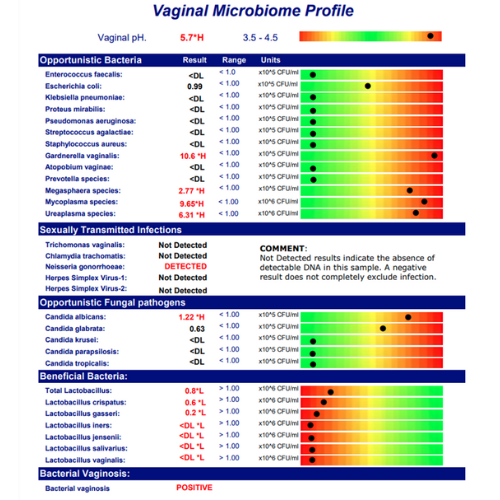
Nutripath Vaginal Microbiome Profile.
While symptoms such as unusual discharge, odour, itching, or discomfort can suggest an imbalance, they do not always reveal the exact cause. Vaginal microbiome testing, such as the Nutripath Vaginal Microbiome Test, can be invaluable. This non-invasive test analyses the bacterial composition of the vaginal environment, identifying:
The presence and abundance of beneficial Lactobacillus species
Overgrowth of potentially harmful bacteria or yeasts
Shifts in pH and microbial diversity
Patterns consistent with bacterial vaginosis, yeast infections, or other dysbiotic states
By pinpointing the specific imbalance, whether it’s a lack of L. crispatus, an overgrowth of anaerobic bacteria, or the presence of pathogens, a tailored treatment plan can be created (Laue et al., 2018; Lehtoranta, 2022).
The Five Community State Types (CST)
Understanding the Five Community State Types (CST) of the vaginal microbiome is valuable when interpreting vaginal microbiome test results because it provides a framework for recognising what “normal” can look like for different women. Each CST is defined by the dominant bacterial species, most often specific Lactobacillus strains, or by a more diverse bacterial mix. Knowing which CST a woman falls into can help distinguish a healthy, protective microbiome from one that may be more prone to imbalance, irritation, or infection. It also allows practitioners to tailor recommendations more accurately, since the optimal microbial composition can vary with life stage, hormonal status, ethnicity, and health history. In short, CST classification turns test results into meaningful, actionable insights for personalised vaginal health support.
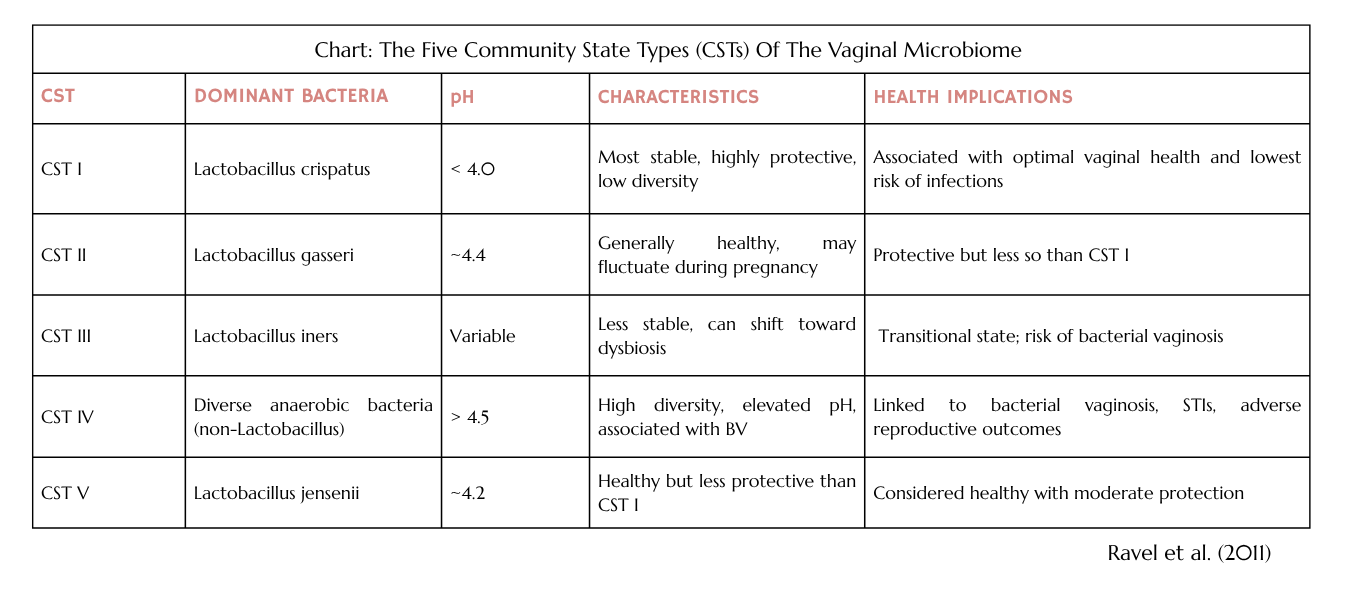
The Five Community State Types (CST) Chart
Benefits of testing include:
Targeted probiotic therapy: Selecting strains that directly address the missing or depleted species
Nutritional and lifestyle recommendations: Adjusting diet, supplements, and hygiene practices to restore balance
Monitoring progress: Re-testing after treatment to confirm microbiome restoration
Preventative care: Identifying early shifts before symptoms become severe
Vaginal microbiome testing thus takes the guesswork out of treatment, enabling precision care to improve outcomes and reduce recurrence (Laue et al., 2018).
Perimenopause and Menopause: Vaginal Microbiome Shifts
During perimenopause and menopause, the natural decline in estrogen levels has a profound impact on the vaginal microbiome. Estrogen stimulates the vaginal epithelium to produce glycogen, which is broken down into glucose and then metabolised by Lactobacillus species into lactic acid. This lactic acid is key to maintaining an acidic vaginal pH (around 4.0–4.5) that inhibits the growth of pathogens. When estrogen levels fall, glycogen production decreases, leading to reduced glucose availability for Lactobacillus and a corresponding drop in lactic acid production. As the vaginal environment becomes less acidic, microbial diversity often increases, but in a way that favours anaerobic and potentially pathogenic bacteria rather than beneficial Lactobacillus dominance. Understanding this hormonal–microbial connection helps guide targeted interventions, such as vaginal estrogen therapy (which would be prescribed by your GP, not us) or Lactobacillus-containing probiotics, to support intimate health during and after the menopausal transition.
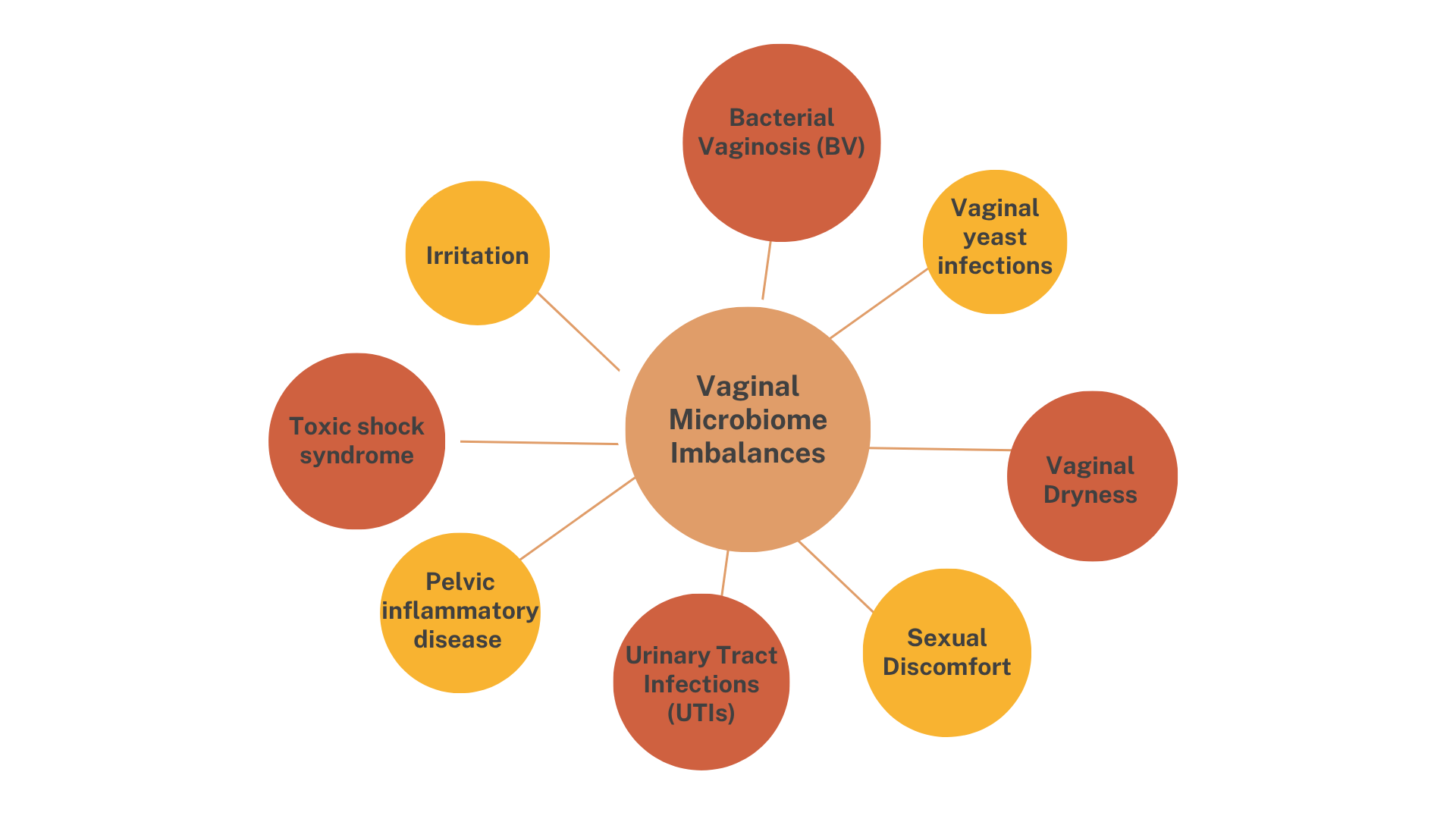
When the vaginal microbiome shifts away from Lactobacillus dominance, it may lead to:
Bacterial Vaginosis (BV)
Vaginal yeast infections
Vaginal dryness
Irritation
Sexual discomfort
Urinary tract infections (UTIs)
Premature birth & low birth weight
Pelvic inflammatory disease
Fertility issues
Sexually transmitted infections
Toxic shock syndrome
These clinical outcomes have been linked to vaginal dysbiosis and non-Lactobacillus dominant microbiomes (Ravel et al., 2011; Indian J Med Res, 2015).
Key Takeaway
The vaginal microbiome is a critical but often overlooked pillar of women’s health. Maintaining a Lactobacillus-dominant, low-pH environment supports reproductive health, protects against infections, and even influences the health of the next generation. Through targeted probiotics, nutritional support, hormonal balance, and lifestyle changes, women can actively protect and restore their vaginal microbiome, with benefits that extend far beyond the reproductive tract (Ravel et al., 2011; Laue et al., 2018; Indian J Med Res, 2015).
Visit our article on “Lifestyle Solutions for Optimising Vaginal Health” for more helpful tips.

Michelle Hislop
TestWise Clinical Nutritionist & Educator
Book an appointment to explore your vaginal microbiome health test today.
Disclaimer:
The information in this article is for educational purposes only and is not intended as medical advice, diagnosis, or treatment. It should not replace consultation with a qualified healthcare professional who can assess your individual health needs. Always seek the guidance of your doctor or other qualified health provider before starting, changing, or discontinuing any medication, supplement, or treatment.